
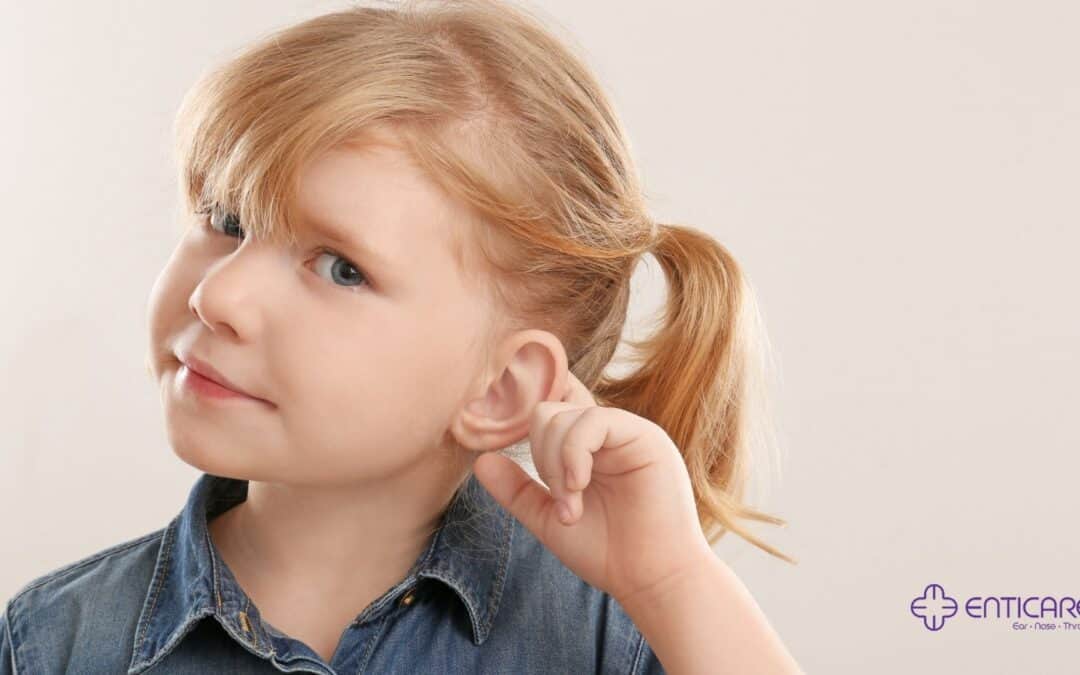
Does My Child Need a Hearing Test?
Yes, your child may need a hearing test if they frequently ask you to repeat yourself, turn up the volume, speak loudly, have difficulty following conversations, struggle to hear in noisy environments, or have delayed speech and language development. Even mild hearing loss can affect communication, learning, and social development, so identifying hearing concerns early is important.
A child does not always realize they are having trouble hearing. Parents, teachers, or caregivers may notice the signs first.
What Are the Signs That My Child May Have Hearing Loss?
The most common signs include frequently asking for repetition, responding inconsistently when spoken to, and having difficulty understanding conversations.
Parents should pay attention if their child:
- Frequently says “What?” or “Huh?”
- Asks people to repeat themselves
- Turns the television, tablet, or phone volume up very high
- Doesn’t respond when called from another room
- Watches people’s faces closely when they are speaking
- Has difficulty following directions
- Struggles to hear in noisy environments
- Speaks louder than expected
- Has unclear speech
- Has difficulty keeping up with classroom conversations
- Complains that their ears feel blocked or muffled
- Frequently experiences ear infections
One or two of these signs do not necessarily mean your child has hearing loss, but persistent or multiple symptoms are a good reason to schedule a hearing evaluation.
Can Hearing Loss Affect My Child's Speech and Language Development?
Yes, untreated hearing loss can affect how a child develops speech and language skills.
Children learn to communicate partly by listening to the people around them. If they cannot consistently hear speech clearly, they may have difficulty learning certain sounds, understanding new words, following conversations, or developing age-appropriate communication skills.
Early identification allows parents and healthcare providers to address hearing problems before they interfere with communication and learning.
Can Ear Infections Cause Temporary Hearing Loss in Children?
Yes, ear infections can cause temporary hearing loss when fluid builds up behind the eardrum.
This type of hearing difficulty often occurs with otitis media with effusion, commonly called fluid in the middle ear. Sound may become muffled while the fluid is present.
If your child experiences frequent ear infections or continues to have trouble hearing after an infection has cleared, a hearing test can help determine whether fluid or another problem is affecting their hearing.
Should My Child Have a Hearing Test Before School Starts?
Yes, a hearing test before school can be beneficial if your child has shown signs of hearing difficulty, speech or language concerns, frequent ear infections, or difficulty following conversations.
Hearing plays an important role in classroom learning. A child who cannot hear the teacher clearly may have difficulty following instructions, participating in discussions, or keeping up with lessons.
A hearing evaluation can identify problems early and help parents address them before they affect the school year.
What Happens During a Child's Hearing Test?
A child’s hearing test usually involves age-appropriate activities that determine how well they hear different sounds and speech.
Depending on the child’s age, an audiologist may use:
- Headphones or insert earphones
- Tones at different pitches and volumes
- Speech recognition activities
- Visual responses or play-based activities
- Tympanometry to evaluate middle-ear function
- Otoacoustic emissions testing when appropriate
The testing approach is adjusted to the child’s age and ability to participate, making the experience comfortable and understandable.
Does a Hearing Test Hurt?
No, a standard hearing test is painless and does not involve needles or painful procedures.
Some parts of the evaluation may involve wearing headphones, listening to sounds, or having a small probe placed in the ear. These procedures are generally quick and well tolerated by children.
At What Age Should a Child Have a Hearing Test?
Children can have their hearing evaluated at any age, and testing is recommended whenever there is a concern about hearing, speech, language, or communication.
Newborns typically receive hearing screening shortly after birth. As children grow, additional testing may be recommended based on their development, school requirements, risk factors, or symptoms.
Parents should not wait for a child to get older if they notice signs of possible hearing difficulty.
Can a Child Have Hearing Loss Without Knowing It?
Yes, a child can have mild or gradual hearing loss without realizing that their hearing is different from other children’s.
Children may adapt by watching faces, sitting closer to the teacher, increasing the volume on devices, or relying on context to understand conversations.
Because these adaptations can make hearing loss less obvious, routine screening and professional evaluation are important when concerns arise.
What Causes Hearing Loss in Children?
Hearing loss in children can have several causes, including temporary problems and permanent conditions.
Common causes include:
- Ear infections
- Fluid behind the eardrum
- Excess earwax
- Congenital hearing loss
- Genetic conditions
- Certain medications
- Exposure to loud sounds
- Head injuries
- Problems affecting the inner ear or auditory nerve
An appropriate hearing evaluation can help determine whether your child’s hearing difficulty is temporary or requires additional care.
Can Loud Noise Damage a Child's Hearing?
Yes, repeated or very loud noise exposure can damage the sensitive structures of the inner ear and contribute to permanent hearing loss.
Children may be exposed to loud sounds from:
- Headphones and earbuds
- Concerts
- Sporting events
- Fireworks
- Power tools
- Recreational vehicles
- Loud toys
Parents can help protect their child’s hearing by keeping personal listening devices at safe volume levels and using hearing protection around loud environments.
When Should Parents Schedule a Hearing Evaluation?
Parents should schedule a hearing evaluation if they notice persistent changes in how their child responds to sound, communicates, or follows conversations.
An evaluation is especially important if your child:
- Frequently asks people to repeat themselves
- Has delayed speech or language development
- Has recurring ear infections
- Doesn’t respond consistently when called
- Struggles to hear in the classroom
- Frequently increases the volume on electronic devices
- Complains about muffled or blocked hearing
- Has difficulty understanding speech
- Has a history of significant noise exposure
A hearing evaluation can determine whether your child’s symptoms are related to hearing loss, ear problems, or another condition.
How Can Hearing Loss Affect My Child at School?
Hearing loss can make it harder for children to follow instructions, understand teachers, participate in discussions, and communicate with classmates.
Even mild hearing difficulty can become more noticeable in classrooms because background noise can make speech harder to understand.
Identifying hearing problems before or during the school year can help families and educators determine whether additional support is needed.
What Should I Do If My Child Fails a Hearing Screening?
If your child does not pass a hearing screening, the next step is usually a more complete hearing evaluation.
A failed screening does not necessarily mean your child has permanent hearing loss. Temporary issues such as earwax, congestion, or fluid behind the eardrum can sometimes affect screening results.
Follow-up testing can determine whether there is an ongoing hearing problem and whether additional medical evaluation is necessary.
Expert Pediatric Hearing Care Across Arizona
ENTICARE provides hearing evaluations and comprehensive ear, nose, and throat care for children throughout Casa Grande, Chandler, Gilbert, Glendale, Maricopa, San Tan Valley, and Scottsdale, Arizona.
If your child frequently asks you to repeat yourself, struggles to hear at school, turns up the volume, or has recurring ear problems, our team can help identify whether hearing loss or another ear condition may be affecting them.
Early evaluation can help parents understand their child’s hearing needs and take appropriate steps to support communication, learning, and development.
Frequently Asked Questions
How do I know if my child needs a hearing test?
Your child may need a hearing test if they frequently ask for repetition, turn up the volume, don't respond when called, struggle to follow conversations, or have speech and language concerns.
Does my child need a hearing test before school?
A hearing test before school is especially helpful if your child has shown signs of hearing difficulty, speech delays, recurring ear infections, or difficulty following conversations.
Can hearing loss affect my child's school performance?
Yes, hearing loss can make it harder for children to understand teachers, follow instructions, participate in class, and communicate with classmates.
Can ear infections affect a child's hearing?
Yes, ear infections can cause temporary hearing loss when fluid or inflammation affects the middle ear. Persistent hearing problems after an infection should be evaluated.
Is a hearing test painful for children?
No, hearing tests are painless. Children typically listen to sounds through headphones or earphones and respond when they hear them.
What are early signs of hearing loss in children?
Early signs can include not responding to their name, frequently asking for repetition, increasing device volume, difficulty following directions, unclear speech, and trouble understanding conversations.
Can children have hearing loss without obvious symptoms?
Yes. Mild or gradual hearing loss can be difficult to notice because children may adapt by watching faces, sitting closer to speakers, or relying on context.
When should I take my child to an ENT specialist?
You should consider an ENT evaluation if your child has persistent hearing difficulties, recurring ear infections, speech or language concerns, ear pain, muffled hearing, or a failed hearing screening.
Don't Ignore Signs of Hearing Difficulty
Hearing problems in children are not always obvious, but small changes in how your child responds to sounds and conversations can be important. If your child frequently asks you to repeat yourself, turns up the volume, struggles to follow conversations, or has recurring ear problems, a hearing evaluation can help identify the cause.
Early detection gives parents more opportunities to address hearing concerns before they interfere with communication, learning, and everyday life.
ENTICARE proudly serves families in Casa Grande, Chandler, Gilbert, Glendale, Maricopa, San Tan Valley, Scottsdale, and surrounding Arizona communities. If you’re concerned about your child’s hearing, schedule an evaluation to better understand their hearing health and support their success at home and at school.